
“We love you, we just don’t agree with your lifestyle.” “Why can’t we just leave politics at the door and be a family?” “I miss the old you.”
If you are an LGBTQIA+ adult in North Carolina, you have likely heard these phrases. They are often delivered with a soft tone, perhaps over a plate of biscuits or at a family reunion. They are framed as attempts at peace-keeping, or even love.
But for your nervous system, these phrases do not register as love. They register as a threat.
For many queer and trans adults, the pain of family strain is often minimized as a “difference of opinion” or a “generational clash.” But when that “disagreement” involves the fundamental validity of your existence, it is not a conflict; it is a trauma.
In the therapy room, we see a specific, pervasive set of symptoms in adults who grew up in non-affirming homes. We call it Family Rejection Trauma. It is a deep, complex wound that mimics C-PTSD (Complex Post-Traumatic Stress Disorder), and it requires more than just “getting over it.” It requires grieving the family you have, so you can build the life you deserve.
The Myth of “Just a Disagreement”
The most insidious aspect of Family Rejection Trauma, particularly in the South, is the gaslighting involved in the word “disagreement.”
In a healthy relationship, a disagreement is about preferences: where to eat dinner, how to spend money, which sports team to support. These conflicts do not threaten the relationship’s foundation.
However, when a family member refuses to use your pronouns, votes for policies that strip your rights, or calls your marriage a sin, they are not expressing a preference. They are expressing a negation of your identity.
When you are told to “agree to disagree” about your own humanity, you are being asked to participate in your own erasure. The psychological toll of constantly auditioning for your parents’ love—of trying to be “good enough” to overlook your queerness—creates a state of chronic hyper-vigilance. You aren’t safe; you are tolerated. And toleration is not love.
5 Signs of Family Rejection Trauma
Family Rejection Trauma often doesn’t look like a dramatic explosion. It looks like exhaustion. It looks like anxiety. It looks like trying to be perfect so no one abandons you. Here are the specific signs of family rejection trauma we see most often in our North Carolina practice.
1. You Experience “Ambiguous Loss” (Grieving the Living)
You haven’t lost your parents to death, but you have lost them. This is known as Ambiguous Loss—specifically, “physical presence with emotional absence.” Your parents might still be alive. You might even talk to them every Sunday. But the version of them who truly knows and cherishes you is gone, or perhaps never existed.
-
The Symptom: You feel a deep, confusing grief after spending time with them, even if no one fought. You mourn the relationship you wish you had, while navigating the hollow shell of the relationship you actually have.
2. Hyper-Independence (The “I Don’t Need Anyone” Shield)
If the people who were supposed to protect you (your caregivers) were the source of your pain, your brain learned a hard lesson: Need is dangerous.
-
The Symptom: You struggle to ask for help. You handle every crisis alone. In relationships, you might be an “avoidant” attacher—pulling away when things get too close because intimacy feels like a trap. You view self-sufficiency not as a skill, but as a survival requirement.
3. Rejection Sensitive Dysphoria (RSD)
While often associated with ADHD, RSD is rampant in survivors of family rejection. Because your baseline for “acceptance” was conditional, your brain is constantly scanning for signs that you are “too much” or “in trouble.”
-
The Symptom: A friend takes three hours to text back, and you spiral into believing they hate you. Your boss gives mild constructive feedback, and you feel a physical wave of shame that makes you want to quit. You are living with a raw nerve where your sense of belonging should be.
4. Fawning and Peacekeeping
This is common in those who grew up in “polite” Southern homes where raising your voice was the ultimate sin. You learned that to survive, you had to manage your parents’ emotions.
-
The Symptom: You are a chameleon. You instinctively change your tone, your opinions, and your mannerisms to match the person you are with to ensure they stay happy. You feel guilty for setting even the smallest boundary (like saying “no” to a holiday visit) because you feel responsible for their disappointment.
5. Somatic Dread (The Body Keeps the Score)
Your mind might say, “It’s fine, I can handle seeing them for an hour.” Your body knows better.
-
The Symptom: In the days leading up to a family phone call or visit, you get migraines. Your IBS flares up. You feel exhausted or have a “grief hangover” that lasts for days after seeing them. Your body is engaging the “Freeze” response because it remembers the unsafety even if you are trying to forget it.
The Southern Context: “Hate the Sin, Love the Sinner”
In North Carolina, family rejection often comes wrapped in religious language. The phrase “Hate the sin, love the sinner” is frequently weaponized to maintain a relationship while rejecting the person.
This creates a Double Bind:
-
If you accept their “love,” you must accept their belief that you are broken/sinful.
-
If you reject their “love” to protect yourself, you are painted as the one breaking up the family.
This is a form of spiritual abuse. It frames your survival (leaving the toxic dynamic) as a moral failing. It allows the family to maintain their self-image as “loving Christians” while actively dismantling your self-worth. Understanding this dynamic is crucial to healing: You are not the one breaking the family by setting a boundary. The boundary is the visible result of the break they caused.
From Grief to Growth: Healing the Wound
If you recognize yourself in these signs, know that you are not broken. You are a normal human being reacting to an abnormal loss of connection. Healing is possible, but it requires shifting your goal from “winning them over” to “saving yourself.”
1. Validate the Grief
Stop telling yourself “it could be worse” or “at least they didn’t kick me out.” Pain is pain. Give yourself permission to mourn the parents you deserved but didn’t get. Cry for the younger version of yourself who tried so hard to be what they wanted.
2. Drop the Rope
There is a concept in therapy called “dropping the rope.” Imagine you are in a tug-of-war with your family. You are pulling for them to understand you; they are pulling for you to change. You are exhausted. You don’t have to win. You can just drop the rope. You can stop explaining. You can stop coming out to them over and over. You can accept that they are committed to misunderstanding you, and you can choose to stop participating in the struggle.
3. Build Your Chosen Family
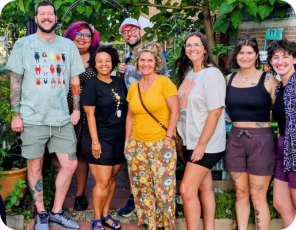
The antidote to the trauma of rejection is not isolation; it is new connection. North Carolina is home to thousands of queer and trans adults who are building their own tables because they weren’t welcome at their parents.
-
Chosen Family isn’t a backup plan; it is a valid, primary form of kinship. It is finding the people who love you because of who you are, not despite it.
Conclusion: You Are Whole
Family Rejection Trauma tells you that you are incomplete without your biological family’s approval. That is a lie. You are whole. You are worthy. And there are people out there—therapists, friends, partners, community members—who will see that wholeness and celebrate it.
You survived the rejection. Now, you get to live.
Are these symptoms hitting close to home? You don’t have to navigate this grief alone. At our practice, we specialize in helping LGBTQIA+ adults in North Carolina process family trauma and build lives defined by joy, not obligation. **** to start your healing journey today.