
41 Clayton St Suite #300, Asheville, NC 28801
102 Commonwealth Ct, Suite B, Cary, NC 27511



41 Clayton St Suite #300, Asheville, NC 28801
102 Commonwealth Ct, Suite B, Cary, NC 27511
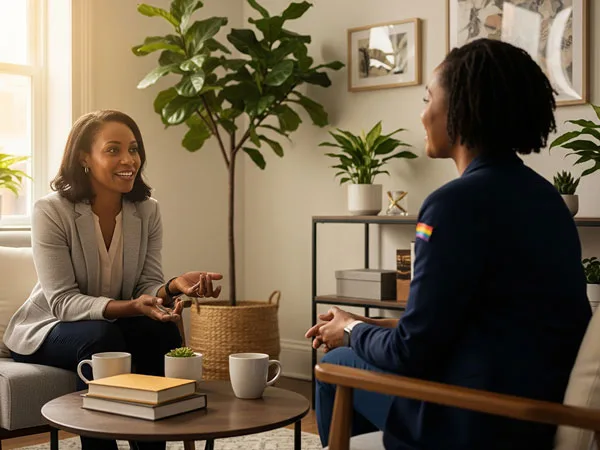
You don’t have to hide your experiences or suffer in silence anymore. You may feel like it’s not OK or SAFE to take up space. Society tells you that if you look different than the status quo, you don’t belong or that you’re not worthy of support. Our multicultural counselors understand. We know that sometimes it feels safer to handle “problems” alone or in the family.
Additionally, we know that it’s a struggle to find quality BIPOC mental health resources. Especially from people who look like YOU. Resilient Mind Counseling in North Carolina takes an anti-racist approach. It is one of our CORE values and it is a non-negotiable for us. We know that the BIPOC community feels scared, traumatized, alone, and unseen. BIPOC is beautiful, BIPOC is unique, and BIPOC deserves healing and connection.
“History has shown us that courage can be contagious, and hope can take on a life of its own.”
~ Michelle Obama

“In times of crisis, the wise build bridges while the foolish build barriers.”
– T’Challah Black Panther
It’s not selfish to prioritize caring for yourself. You don’t have to always put work or your family’s needs over your own. In fact, you can be a better you for others if you take care of yourself first.
Self-care is not a selfish act and it certainly doesn’t make you weak. Resilient Mind Counseling knows that BIPOC communities don’t always have equal access to care. Additionally, it can feel like they can’t talk about their problems with strangers. We want to change that with our multicultural counseling. So it is tailored to YOUR experiences.

A BIPOC therapist can help you experience fewer stress symptoms. As well as help you process your unique experiences as BIPOC. It’s possible to feel better. Imagine a life where you could.
There is no shame in asking for help and finding BIPOC mental health resources. Our multicultural counselors based in Asheville, NC are here to support you in your healing journey. From wherever you are located in North Carolina with online therapy. We believe
Our multicultural counselors understand that you need support from someone who understands. As part of the BIPOC community, you experience things that so many others will never have to and it is harder to find BIPOC mental health resources. At Resilient Mind Counseling in North Carolina, we want to make sure you can receive supportive BIPOC mental health resources tailored to those experiences. It can be difficult to take the first step of connecting with a therapist, However, we want to help by simplifying the process. Start by following these steps:
STEP-01
Start by reaching out to us for a free consultation.
BOOK NOW

STEP-02
Then you can schedule your first appointment with one of our online therapists.
Choose Therapist
STEP-03
Get the support and understanding you need and deserve!
Start Now
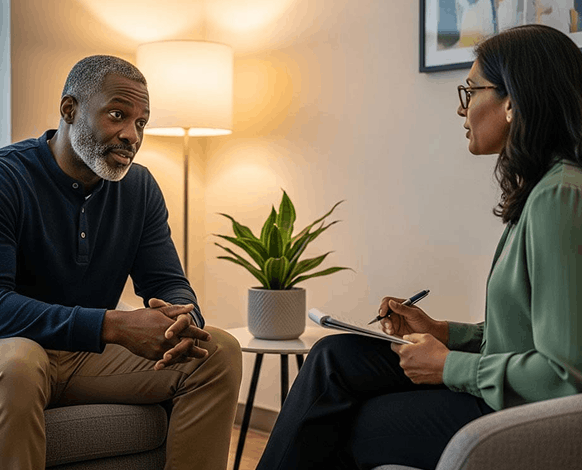
At Resilient Mind Counseling, we believe in providing inclusive counseling services. This is why we also provide supportive therapy for those who identify as Neurodivergent and LGBTQ. Our online therapists in North Carolina also provide anxiety treatment, depression treatment, and PTSD treatment. As well as mood disorder treatment, marriage counseling, and couples therapy.
For accessibility, we provide these services through online therapy in North Carolina.
We accept payment through a HIPAA compliant payment processing software.
This ensures that your financial information remains encrypted and protected.
Therapy can be vulnerable and new, so it’s natural to be nervous. It can be scary to think of opening up or crying in front of someone new, perhaps fearing that it will be awkward and uncomfortable. The fear around that can feel overwhelming. Getting the counseling we need can be challenging. And although it’s normal to be nervous, that doesn’t make it feel great. It takes courage to continue getting the help you need.
Therapy is a space where you can be yourself and feel safe from judgment, including feeling nervous. We’re committed to finding a way to care for your nervousness and ensure sessions are as comfortable as possible.
We’re here if you want to talk about it during a free phone consultation.
Take your time to read through this website. If you sense that we may be a good fit based on what you are reading, you can call us.
During a free phone consultation, you can ask one of our therapists about how they have helped other people like you before, ask how they work as a therapist, or any other questions you may have that are specific-to-you. You’ll also be able to tell them what’s up, and you and one of our therapists can decide together how they can help.
It will usually take a couple of sessions to feel comfortable and develop a relationship. During the sessions, you’ll be able to understand how comfortable you feel in sessions. Our approach is not going to work for everyone. What’s most important is that you find someone who you feel is the right fit for you. We can explore that together.
If something feels overwhelming or even terrifying to discuss, that’s actually very normal. It can often feel difficult to talk about some things. During sessions, your therapist will never push you to talk about things that are too painful for you to talk about. They will be there to guide you towards discovering what feels comfortable for you to share. Working at your pace, together you can look at the tough stuff if you’re ready.
You can also share with them that you are nervous to open up about something, and you and your therapist can talk about that too. Whatever is present for you. Whatever you are going through. Bring that to session and you can explore that together.
If you open up, we will not think you are crazy. We will think you are someone who’s very courageous. Many clients have had the same fear (that people would think they are crazy).
Through our own life journeys and working with clients, we know how “normal” your experience is.
You’re not being dramatic or “too much.” Nothing you can say will cause us to judge you.
We know nobody’s perfect. We all struggle. We all suffer in different ways.
Whatever it is you’re going through, we provide a safe space where you can feel heard and supported without judgment.
You might already know that you want to share sensitive information about your loved ones and you don’t want them to find out what you’ve said. So we want you to know that unless there is an imminent danger to yourself or someone else, everything you share is completely confidential.
There is nothing more important than your privacy.
You can rest assured that you can talk about anything without fear of that information getting out.
If you have specific questions about how confidentiality works, you can ask during your free phone consultation or anytime during your work with your therapist.
Overall, you can think of the first session as a structured assessment that helps your therapist get to know you and the challenges that brought you into treatment. They’ll invite you to share more about yourself, and you can also talk about what’s worked or not worked for your mental health in the past.
Some questions that your therapist might ask during a first session include:
You can ask your therapist questions as well. You might be curious about their experience or how future sessions work.
The most important part of a first session is that you see if you feel your therapist is a good fit for you. If you feel supported, seen, and at ease with them, you can discuss if you’d like to meet again.
Sometimes the hardest part is getting started. We’re here to make it easier with a free consultation—just a conversation, no pressure, only support.