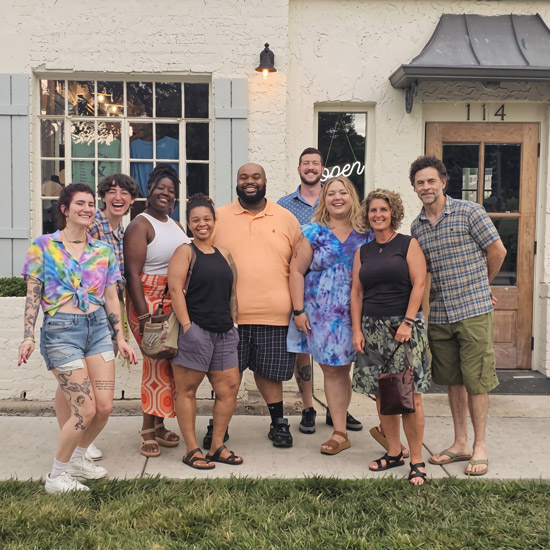

In North Carolina, the concept of “family” is heavy. It is woven into our Sunday dinners, our holiday traditions, and our cultural identity. We are raised to believe that family is everything—that blood is thicker than water, and that you stick together no matter what.
But for many LGBTQIA+ folks in the South, this narrative is a source of profound pain.
When the people who are supposed to be your sanctuary become the source of your harm, the foundation of your world shakes. Whether it is the overt rejection of being disowned or the covert, “polite” rejection of a family member who says, “I love you, I just don’t agree with your lifestyle,” the impact is traumatic.
This guide is written for every queer, trans, and non-binary North Carolinian who is grieving the family they were born into and looking for the family they deserve. We will explore the reality of Family Rejection Trauma, deconstruct the myth that you are “broken” for not fitting in, and provide a roadmap for building a Chosen Family right here in our state.
Part 1: The Wound of Rejection in the Bible Belt
To heal, we must first name the injury. In the South, family rejection often looks different than it does in other parts of the country. It is frequently wrapped in the language of faith and concern, making it harder to identify and easier to internalize.
The “Polite” Rejection
Southern culture prioritizes politeness and “keeping the peace” above authentic connection. This leads to a specific form of gaslighting where family members maintain a surface-level relationship while rejecting your core identity.
-
The “Bless Your Heart” Dynamic: Family members may pray for you, send you cards, and invite you to dinner, yet refuse to use your correct pronouns or acknowledge your partner.
-
The Impact: This creates Ambiguous Loss—a type of grief where the person is physically present but psychologically absent. You are grieving a relationship that looks alive on the outside but is dead on the inside. This state of limbo keeps your nervous system in chronic hyperarousal, constantly waiting for the other shoe to drop.
Religious Trauma and “Love the Sinner”
For many of us raised in high-control religious environments (common from Charlotte to Asheville to the coast), rejection is framed as a moral imperative. The phrase “Love the sinner, hate the sin” is often used to justify emotional abuse.
-
The Double Bind: You are told that if you leave the toxic dynamic, you are the one destroying the family. This shifts the blame from their lack of acceptance to your need for safety.
-
The Reality: Setting a boundary is not an act of aggression; it is an act of self-preservation. You are not breaking the family by leaving; you are surviving the break they caused.
Part 2: What is “Chosen Family”?
Chosen Family is not a consolation prize. It is not a “backup plan” for those who failed at having a “real” family.
Chosen Family is a deliberate, conscious commitment to care for and be cared for by people who see, know, and celebrate you. It is a biological survival mechanism for the queer community.
The Difference Between “Friends” and “Family”
We all have friends. Chosen Family is different. It involves a deeper level of Interdependence.
-
Friends hang out when it’s convenient. Chosen Family picks you up from the airport at 1 AM.
-
Friends know your good stories. Chosen Family holds your trauma and knows your triggers.
-
Friends are for fun. Chosen Family is for survival—they are your emergency contacts, your power of attorney, and your holiday table.
In a state like North Carolina, where legislative attacks on LGBTQ+ rights can make the world feel hostile, Chosen Family provides the Psychological Safety necessary to function. They are the mirror that reflects your true self back to you when the world tries to distort it.
Part 3: How to Build Chosen Family in NC
Building community as an adult is hard. Building it as a traumatized adult who fears rejection is even harder. It requires vulnerability, which is the very thing you may have learned to protect.
Here is a practical roadmap for finding your people in North Carolina.
Step 1: Identify “Third Places”
A “Third Place” is a social surrounding separate from the two usual social environments of home (First Place) and the workplace (Second Place). You need to find spaces where you can exist authentically.
-
Look for Safety Signals: In NC, look for businesses displaying the “Progress Pride” flag, not just the standard rainbow. Look for spaces that explicitly state “All Are Welcome” or have gender-neutral restrooms.
Step 2: Show Up Consistently
Community doesn’t happen in a day; it happens over time. The “Mere Exposure Effect” suggests that simply showing up to the same place repeatedly increases likability and trust.
-
The Strategy: Don’t just go to one event. Commit to a weekly meet-up, a monthly book club, or a recreational sports league. Consistency builds the familiarity required for vulnerability.
Step 3: Move from “Activity” to “Intimacy”
This is the hardest step. You have to move the relationship outside of the structured activity.
-
The Script: “I’ve really enjoyed talking to you at [Event]. Would you want to grab coffee/tea before the next meeting?”
-
The Vulnerability Hangover: You might feel anxious after extending an invite. That is your trauma speaking, trying to protect you from rejection. Push through it.
Part 4: Regional Resource Guide (Where to Find Your People)
North Carolina has a rich, resilient network of queer organizations. Here is where you can start building your circle, region by region.
The Research Triangle (Raleigh, Durham, Chapel Hill)
-
LGBT Center of Raleigh: A hub for community programming, including specific support groups for trans adults, youth, and older adults.
-
LGBTQ Center of Durham: Known for its strong advocacy and social events. Their “Pride: Durham, NC” events are community-focused rather than corporate.
-
Stonewall Sports (Raleigh/Durham): A massive intramural sports league (kickball, dodgeball, bowling) that is less about athletics and more about socialization. You don’t need to be an athlete to join; you just need to want to meet people.
-
Neurodiversity Empowerment Services: For those who are Neuroqueer (Autistic/ADHD and LGBTQ+), they offer dinner clubs and social scaffolding.
Charlotte Metro Area
-
Time Out Youth: While focused on youth (ages 13-24), they are a central hub for connecting with the broader community and finding volunteer opportunities where you can meet other affirming adults.
-
Stonewall Sports Charlotte: One of the largest chapters in the country.
-
Charlotte Pride: Beyond the festival, they offer year-round programming and “Reel Out Charlotte,” a film festival that serves as a great low-pressure social event.
-
Religious/Spiritual Spaces: If you miss faith community, look for affirming congregations like St. Luke Missionary Baptist (a radical, affirming Black church) or Myers Park Baptist.
Western North Carolina (Asheville & Surrounds)
-
Tranzmission: One of the oldest trans advocacy groups in the South. They offer support groups that are vital for building Chosen Family in the mountains.
-
Blue Ridge Pride: Focuses on the unique needs of rural LGBTQ+ folks in WNC.
-
Firestorm Books: A queer-owned cooperative bookstore in Asheville that functions as a de facto community center and safe haven.
-
Arms Around ASD: For the Neuroqueer community in Asheville, providing a gentle space to connect.
The Triad (Greensboro, Winston-Salem)
-
Guilford Green Foundation & LGBTQ Center: Located in Greensboro, they offer a physical community center with regular social hours and senior programming.
-
North Star LGBTQ+ Community Center: Based in Winston-Salem, offering diverse programming from youth groups to crafting circles.
Part 5: The Role of Therapy in Rebuilding
You cannot build a new house on a cracked foundation.
For many, the trauma of family rejection creates “attachment wounds” that make it hard to trust new people. You might find yourself:
-
Over-giving: Trying to “buy” love by being the most helpful person in the room.
-
Isolating: Pulling away as soon as someone gets close because intimacy feels dangerous.
-
Testing: Subconsciously pushing people away to see if they will leave like your parents did.
Affirming Therapy helps you heal these wounds. It provides a “corrective emotional experience” where you learn that you can be seen, known, and still loved. It helps you grieve the family you didn’t have so you have the emotional capacity to embrace the family you do have.
Conclusion: You Are Worthy of Belonging
If you take nothing else from this guide, take this: The failure of your biological family to love you is not a reflection of your lovability; it is a reflection of their capacity.
You are not too much. You are not “difficult.” You are a person worthy of unconditional love, safety, and a seat at the table. In North Carolina, there are thousands of us building those tables right now. We are saving a seat for you.
Ready to start healing?
Navigating family rejection and building new connections is brave work, but you don’t have to do it alone. **** with our affirming therapists to start your journey from isolation to community today.