Why We Choose “Fat Liberation” Over “Body Positivity” (And Why It Matters for Your Healing)
If you live in a larger body in North Carolina, you likely know the specific texture of Southern judgment. It is rarely loud or aggressive. Instead, it is often wrapped in “concern”—a bless-your-heart politeness that suggests your body is a problem to be solved, a prayer request to be managed, or a medical condition to be pitied.
For years, the wellness industry has offered a counter-narrative: Body Positivity. You’ve seen the hashtags. You’ve likely heard the advice: “Just love your curves!” “You are beautiful no matter what!”
But what happens when “loving yourself” doesn’t stop your doctor from denying you care? What happens when “feeling beautiful” doesn’t make the airplane seat bigger, or the workplace discrimination illegal?
This is where the disconnect happens. This is why you might feel like you are failing at body positivity, even though you are trying your hardest.
At our practice, and among a growing network of radical providers from Asheville to Wilmington, we are shifting the conversation. We are moving beyond Body Positivity and toward Fat Liberation. This is not just a change in terminology; it is a fundamental shift in how we approach mental health, trauma, and existence in a world that wasn’t built for us.
This guide explains why that distinction matters, the radical history you were likely never taught, and how “Fat Liberation Therapy” works differently to heal the wounds that “positivity” cannot reach.
- The Trap of Modern “Body Positivity”
To understand why we practice Fat Liberation, we first have to look at what Body Positivity has become.
The “Acceptable Fat” Body
In the last decade, Body Positivity has gone mainstream. You see it in Dove commercials and Target ads. While representation matters, the corporate version of this movement has created a new, narrow standard of acceptability.
Mainstream Body Positivity tends to celebrate a very specific type of fat body: usually white, usually hourglass-shaped, usually young, and usually “small fat” (sizes 14–18). It celebrates curves, but only if they are in the “right” places. It celebrates health, but only if you can prove you are “one of the good ones” who exercises constantly.
This leaves out the vast majority of fat people. It excludes:
- Superfat and Infinifat individuals (sizes 24+ and 32+).
- Bodies with aprons (hanging bellies), cellulite, or asymmetry.
- Disabled bodies that cannot perform “health” through exercise.
- Black, Brown, and Queer bodies that face compounded marginalization.
The Failure of “Self-Love” as a Solution
The core message of Body Positivity is internal: The problem is your mindset. If you just loved yourself enough, the stigma wouldn’t hurt.
This is a form of gaslighting. If you go to a doctor in Raleigh for a sore throat and are lectured about your BMI, feeling “beautiful” will not help you get the antibiotic you need. If you are denied a job promotion in Charlotte because you don’t fit the “corporate image,” high self-esteem does not pay your rent.
Body Positivity locates the problem inside you. Fat Liberation locates the problem inside the system.
- Defining Fat Liberation: The Radical Alternative
Fat Liberation is not about how you feel when you look in the mirror. It is a political and social justice movement that asserts that fat people have an inherent right to dignity, healthcare, employment, and respect, regardless of their health status or compliance with beauty standards.
The Core Tenets of Liberation
When you work with a Fat Liberation therapist—such as those at Resilient Mind Counseling in Asheville or Valid Love in Wilmington—the framework shifts. We stop trying to “fix” your body image and start working to dismantle the internalized oppression you have absorbed.
- Systemic over Individual: We acknowledge that fatphobia is a system of oppression, akin to racism or sexism. Your depression regarding your weight is not a “symptom” of mental illness; it is often a rational response to living in a hostile environment.
- Bodily Autonomy: You are not required to be healthy to deserve respect. We reject “Healthism”—the idea that health is a moral obligation or a prerequisite for dignity.
- Community Care: Liberation happens together. We move away from the isolation of dieting and toward the collective power of community.
The Erasure of Radical Roots
It is vital to acknowledge that Fat Liberation is not new. It was not invented on TikTok. It is a movement built by Black, Queer women in the late 1960s, whose labor is often erased by the modern “wellness” industry.
In 1967, 500 people gathered in Central Park for a “Fat-in,” burning diet books and photos of the model Twiggy. In 1973, the Fat Underground released the Fat Liberation Manifesto, explicitly linking weight discrimination to sexism and capitalism.
However, as the movement grew, it was co-opted. White, thinner women became the face of “Body Positivity,” stripping the movement of its political teeth and distancing it from its Black and Queer origins.
In North Carolina, practices like Radical Healing in Durham are intentionally working to repair this rupture. By centering BIPOC and Queer voices and offering a Black Mental Health Fund, they remind us that there is no body liberation without racial justice.
- The “Headless Fatty” and Medical Violence in NC
If you have ever watched a news segment about the “Obesity Epidemic” on a local North Carolina news station, you have seen it: the B-roll footage of fat people walking down the street, filmed from the neck down.
This is the “Headless Fatty” phenomenon.
It strips the subject of their humanity, their face, and their identity, reducing them to a lumbering torso—a symbol of a “public health crisis” rather than a human being. This visual violence teaches us that fat people are not individuals; they are a contagion.
The Reality of Medical Trauma in the South
For our clients, this dehumanization is most dangerous in the doctor’s office. North Carolina has some of the finest medical institutions in the world, with Duke, UNC, and Wake Forest leading global research. Yet, for fat patients, these institutions can be sites of profound trauma.
Medical trauma looks like:
- The “Door Handle” Diagnosis: A doctor walking into the room, looking at your body, and deciding your diagnosis before asking a single question.
- Denied Procedures: Being told you cannot have a knee replacement, fertility treatment, or gender-affirming surgery until you lose an arbitrary amount of weight.
- The “Southern Diet” Lecture: A provider assuming that because you live in NC and are fat, you must be drinking sweet tea and eating Bojangles all day—ignoring your actual nutritional reality or economic constraints.
How Liberation Therapy Treats Medical Trauma
A “weight-management” therapist might help you comply with the doctor’s diet orders. A Fat Liberation therapist helps you fight back.
In therapy, this looks like:
- Role-Playing Advocacy: We practice scripts for your next appointment. “I consent to having my blood pressure taken, but I do not consent to being weighed today.”
- Vetting Providers: We don’t just tell you to “go to the doctor.” We help you find the right doctor. We utilize networks like the Association for Size Diversity and Health (ASDAH) and local referral lists to find providers in the Triangle, Triad, and Charlotte who practice Health at Every Size® (HAES®).
- Validating the Anger: We allow you to be angry. The rage you feel after being dismissed by a medical professional is healthy. It is the part of you that knows you deserve better.
- Why “Health” Is Not the Rent You Pay to Exist
One of the hardest hurdles for our clients in North Carolina is the cultural pressure surrounding “health” and “morality.” In the South, food is love, but gluttony is a sin. This religious and cultural contradiction creates a deep sense of shame.
Deconstructing the “Southern Diet” Stigma
There is a pervasive myth that traditional Southern food is inherently “bad” or “unhealthy.” This is a colonialist and classist view that pathologizes the foodways of Black and rural working-class communities.
In Fat Liberation therapy, we work to neutralize food.
- Collard greens cooked with ham hocks are nutrient-dense and culturally significant.
- Biscuits are a source of energy and comfort, not a moral failing.
We partner with anti-diet dietitians, like Nutritious Thoughts (Asheville/Cary) and Stepping Stones Nutrition (Raleigh), who help clients engage in Intuitive Eating. This isn’t about “eating whatever you want” in a chaotic way; it’s about reconnecting with the body’s innate wisdom, which has often been silenced by decades of dieting.
HAES® in a Liberation Context
You will often see the acronym HAES® (Health at Every Size®) on our website. It is crucial to understand what this means—and what it doesn’t.
HAES is NOT:
- A claim that every fat person is healthy.
- A claim that weight has no impact on health.
HAES IS:
- A framework stating that health interventions should be accessible to everyone, regardless of weight.
- An evidence-based understanding that weight cycling (yo-yo dieting) is often more dangerous to cardiac health than static obesity.
- A commitment to promoting health behaviors (sleep, hydration, movement, stress reduction) without using weight loss as the metric of success.
- What Does Fat Liberation Therapy Actually Look Like?
If you decide to begin this journey, what happens in the room? How is this different from standard talk therapy?
- The Environment is Different
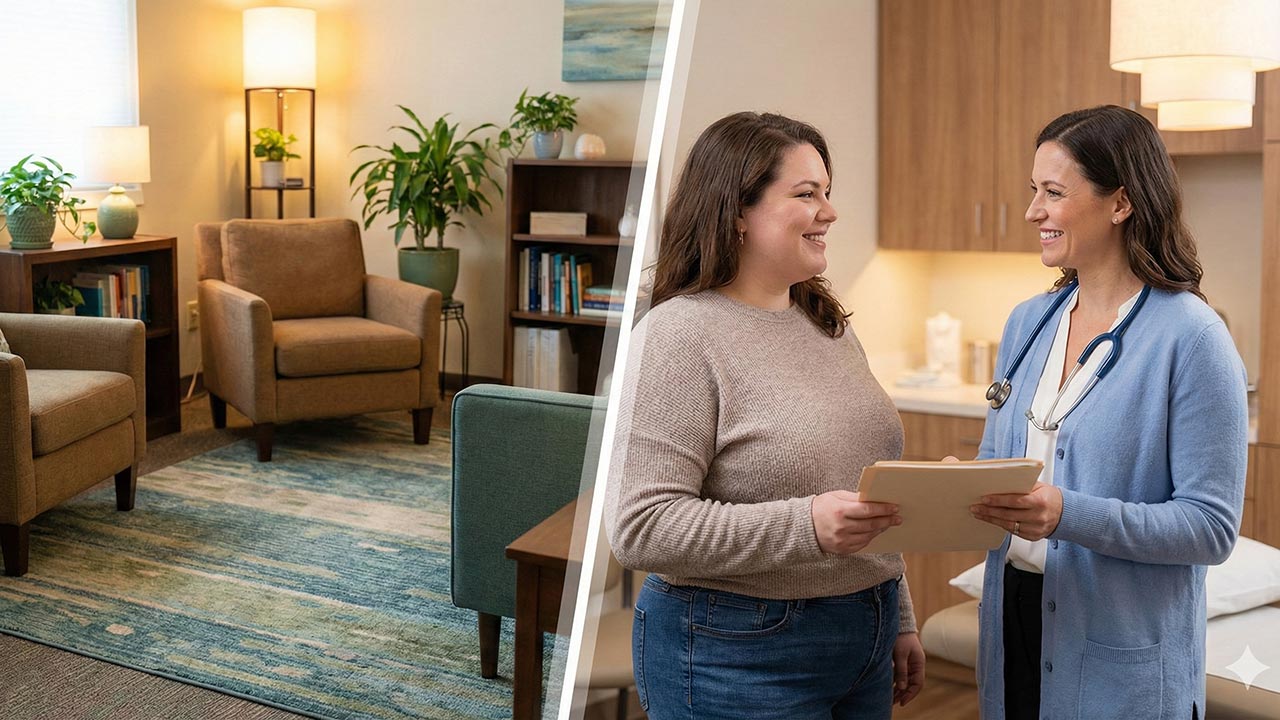
It starts before you sit down. A Fat Liberation practice is physically designed for your safety.
- Seating: You won’t find flimsy chairs with arms that dig into your hips. You will find loveseats, armless chairs, and bariatric-rated furniture.
- Visuals: No magazines with weight-loss tips in the lobby. No “Before and After” posters.
- We Do “Parts Work” (Internal Family Systems)
Many of us have a “Manager” part of our brain that enforces dieting. This part is terrified that if we stop dieting, we will be unlovable or unsafe. Instead of fighting this part, we interview it. We ask: What are you trying to protect me from? Usually, the answer is: I’m trying to protect you from the pain of rejection. This approach, used by providers like Inside Out Collaborative in Charlotte, allows us to heal the fear without hating the fat.
- Somatic (Body-Based) Healing
You cannot talk your way out of body hatred, because the trauma lives in your nervous system. If you have spent 20 years sucking in your stomach, your diaphragm is tight. Your vagus nerve is compressed. You are in a constant state of “fight or flight.” Therapists in the Asheville area, known for their somatic focus, use techniques to help you inhabit your body safely. This might mean feeling the sensation of your feet on the floor, or learning to breathe into your belly without shame.
- We Grieve
This is the step most people skip. We have to grieve the “Thin Fantasy.” Most fat people have spent their lives waiting to start living. I’ll take that trip when I lose 50 pounds. I’ll date when I’m a size 12. Liberation asks us to give up the hope that we will become thin, so that we can start living now. This is painful. It requires mourning the time lost to dieting. But on the other side of that grief is freedom.
- Finding Your Safe Harbor in North Carolina
North Carolina is a state of contrasts. We have deep conservatism and radical progressivism living side by side. Navigating this landscape as a fat person requires knowing where your safe harbors are.
The Geography of Care
- Western NC (Asheville): The hub of radical, somatic, and spiritual liberation. This is where you go to deeply politicize your body and connect with nature (shoutout to Fat Girls Hiking NC chapters for reclaiming the trails).
- The Triangle (Raleigh-Durham-Chapel Hill): The hub of integrated care. If you need a doctor, a physical therapist, and a therapist who all talk to each other and won’t shame you, practices like Radical Healing set the gold standard.
- The Coast (Wilmington): Emerging communities like Valid Love are bringing hard-hitting social justice advocacy to a region that has historically lacked specialized resources.
Accessibility and Economics
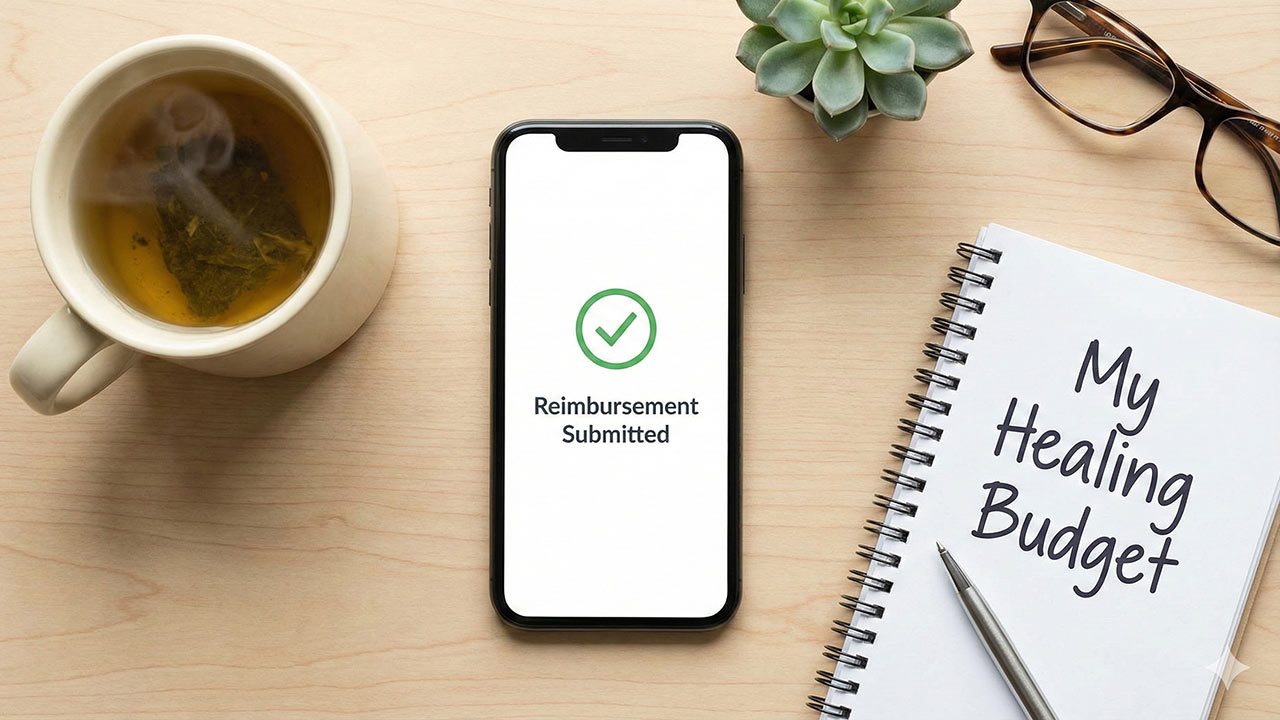
We know that the “Wellness Industrial Complex” is expensive. Liberation should not be a luxury good. While many specialists are private pay, there is a push for accessibility:
- Winter to Spring Wellness (Asheville) offers intern sessions for $10–$50.
- Radical Healing (Durham) and Three Oaks Behavioral Health (Raleigh) accept commercial insurance and, in some cases, Medicaid.
- Superbills: If your therapist is out-of-network, ask for a Superbill. Many NC insurance plans have better out-of-network benefits than you realize.
Conclusion: Join the Resistance
Choosing Fat Liberation in a world obsessed with thinness is an act of resistance. It is a refusal to shrink. It is a refusal to apologize for the space you take up.
If you are tired of the cycle of shame—if you are exhausted by the “positivity” that feels like just another performance—it is time to try something different.
You do not have to love your body every day. You do not have to think you are beautiful every moment. You just have to believe that you deserve to be here, exactly as you are.
You are not a problem to be solved.