In the “Bible Belt” of the South, religion is more than just a Sunday activity; it is a cultural framework that dictates social rules, moral hierarchies, and community belonging. For many, it provides comfort. But for neurodivergent people—those with Autism, ADHD, or AuDHD—high-control religious environments can become a specific source of deep, lasting psychological injury.
We are increasingly seeing a specific intersection in therapy rooms across North Carolina: Neurodivergent Religious Trauma.
It’s not a coincidence. The very traits that make us neurodivergent (black-and-white thinking, a strong sense of justice, literal interpretation of language) can make us uniquely vulnerable to fundamentalist structures. And conversely, those structures often weaponize our traits against us, labeling our sensory meltdowns as “rebellion” and our questions as “lack of faith.”
The Appeal: Why We Get Drawn In
To understand the trauma, we must first understand the attraction. For an undiagnosed Autistic person or an ADHDer seeking structure, high-control religion can initially feel like a sanctuary.
-
The Script is Written: Neurodivergent people often struggle with the ambiguity of social rules. Fundamentalist religion offers a clear, rigid rulebook: Do this, don’t do that, wear this, say that. It removes the anxiety of the unknown.
-
Black and White Thinking: Many autistic brains thrive on binary categorization (Right/Wrong, Good/Bad). Religious dogma satisfies this cognitive preference, providing a neatly ordered universe.
-
Instant Community: “Love bombing” (the practice of overwhelming a new member with affection) can feel incredibly validating to a neurodivergent person who has historically felt socially isolated or “weird.”
The Trap: Literalism and Fear
However, these same traits eventually become the source of the wound.
Literal Interpretation of Hell and Sin When a pastor speaks metaphorically about “sin being a stain” or “hellfire,” a neurotypical brain often processes this with a degree of nuance. The Autistic brain, prone to literalism, may process this as an immediate, physical threat. We work with clients who spent their childhoods in a state of chronic, terror-induced nervous system activation, believing that every intrusive thought or minor mistake was a literal step toward eternal torture. This is not just “worry”; it is developmental trauma.
The “Broken” Narrative Many high-control groups preach the concept of “brokenness” or “original sin”—that the self is inherently untrustworthy and must be denied. For a neurodivergent person who already feels “different” or “wrong” in a neurotypical world, this theology confirms their worst fear: I struggle because I am bad.
-
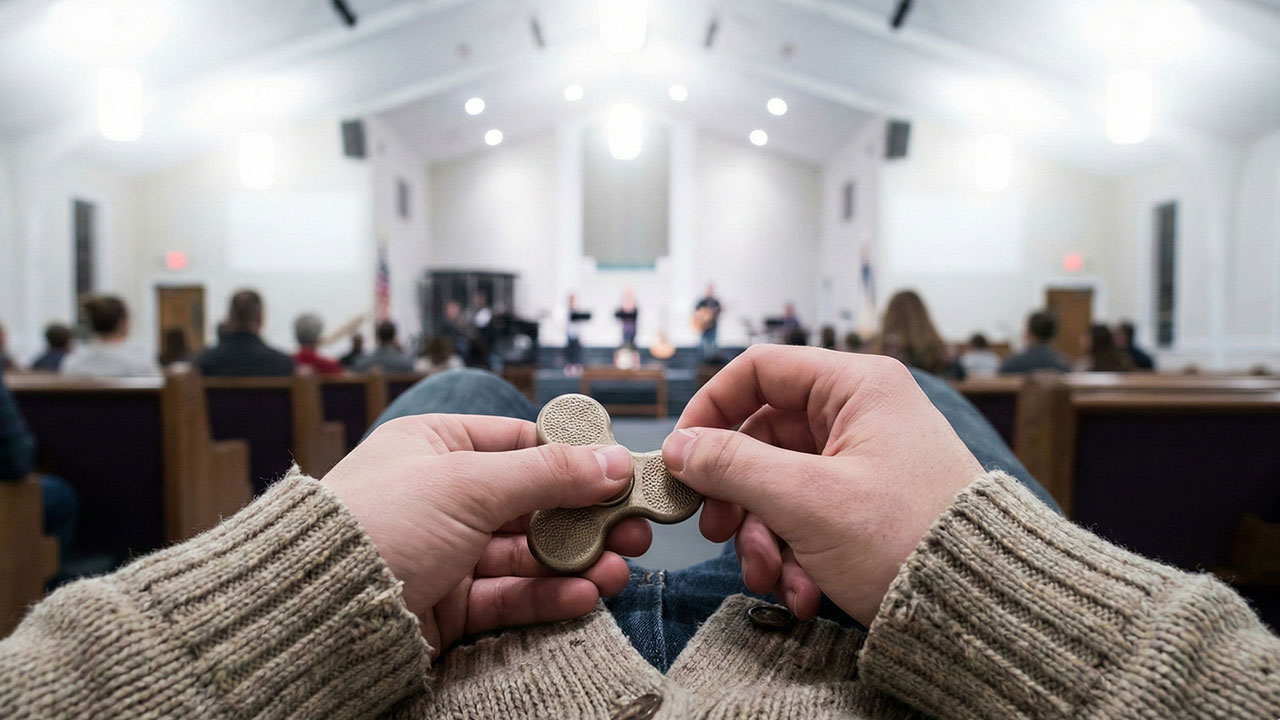
The ADHD inability to sit still in church becomes a “spirit of rebellion.”
-
The Autistic inability to make eye contact becomes “hiding a sin.”
-
The executive dysfunction preventing daily quiet time becomes “spiritual laziness.”
Compliance Training as Spiritual Abuse
The most damaging intersection occurs in how high-control groups handle behavior. Much like ABA (Applied Behavior Analysis), fundamentalist child-rearing often emphasizes immediate, unquestioning compliance.
Popular religious parenting books often advise breaking a child’s will to ensure obedience to God. For a neurodivergent child, whose behavior is often a result of sensory overwhelm or regulation needs, this is devastating.
When an Autistic child has a meltdown because the church band is too loud, and they are punished for “disrupting the spirit,” they learn a dangerous lesson: My body’s signals are sinful. To be good, I must dissociate from my pain.
This is Spiritual Bypassing weaponized against disability. The child learns that their neurotype is a barrier to God, leading to decades of masking that is framed as “sanctification.”
The Justice Sensitivity Conflict
Eventually, the Autistic trait of Justice Sensitivity often leads to the exit. We cannot ignore contradictions.
-
Why does the church claim to love everyone but exclude LGBTQ+ people?
-
Why does the pastor drive a luxury car while the poor go hungry?
While others might gloss over these contradictions for the sake of community, the neurodivergent brain often cannot let it go. This leads to questioning, which leads to punishment or ostracization.
Leaving the Fold: The Loss of Structure
Deconstruction (the process of leaving one’s faith) is traumatic for anyone, but for neurodivergent people, it involves a terrifying loss of executive scaffolding. If your entire week, your social script, and your moral decision-making framework were provided by the church, leaving creates a void.
-
How do I make friends without the church script?
-
How do I know if I’m a good person without the rules?
This often leads to a period of intense regression or burnout immediately after leaving, as the brain scrambles to build a new operating system from scratch.
Healing: Reclaiming the Self
Recovering from religious trauma as a neurodivergent person requires a specific, affirming approach.
-
Re-establishing Bodily Autonomy: You were taught your body was sinful or needed to be controlled. Healing involves listening to your body’s sensory needs and honoring them as valid, not “fleshly.
-
Validating the “Black and White”: Instead of shaming yourself for wanting clear answers, we work on finding safety in the “grey” areas of life, using logic and ethics rather than dogma.
-
Uncoupling Neurodivergence from Sin: Your ADHD is not a lack of discipline. Your Autism is not a lack of empathy. Re-framing these traits through a neutral, biological lens is essential.
You are allowed to find a spirituality that fits your brain, or no spirituality at all. You are allowed to trust your intuition. Most importantly, you are allowed to believe that you were never “broken” to begin with—you were just different, and that difference is not a sin.