
Why “Weight-Inclusive” Healthcare is Safer Than Weight Management: A Patient’s Guide to Advocacy
If you live in a larger body, you likely know the specific dread of the “Annual Physical.”
It starts days before the appointment. The anxiety about the scale. The mental rehearsal of what you’ve eaten lately. The fear that no matter what valid health concern you bring up—a sore throat, a twisted ankle, a sudden migraine—the diagnosis will inevitably be the same:
“It’s probably your weight.”
For decades, we have been told that this dynamic is simply “tough love” medicine. We are told that doctors who lecture us about BMI are just “worried about our health.”
But the data tells a different story.
Research increasingly shows that weight-centric healthcare (healthcare that prioritizes weight loss) is not only ineffective; it is often medically dangerous. It leads to missed diagnoses, delayed treatment, and a phenomenon known as Medical Trauma.
Conversely, Weight-Inclusive Healthcare—the model practiced by HAES® providers across North Carolina, from Radical Healing in Durham to Resilient Mind Counseling in Asheville—is proving to be the safer, more rigorous standard of care.
This guide is your roadmap to safety. We will explore why “prescribing weight loss” is a medical error, how to identify if you have experienced medical trauma, and the specific scripts and legal rights you have in North Carolina to demand the care you deserve.
- The Safety Gap: How Weight Bias Harms Patients
There is a dangerous misconception that “Fat Liberation” or “Weight Neutrality” ignores health. The opposite is true. We advocate for this model specifically because weight bias kills.
The “Door Handle Diagnosis”
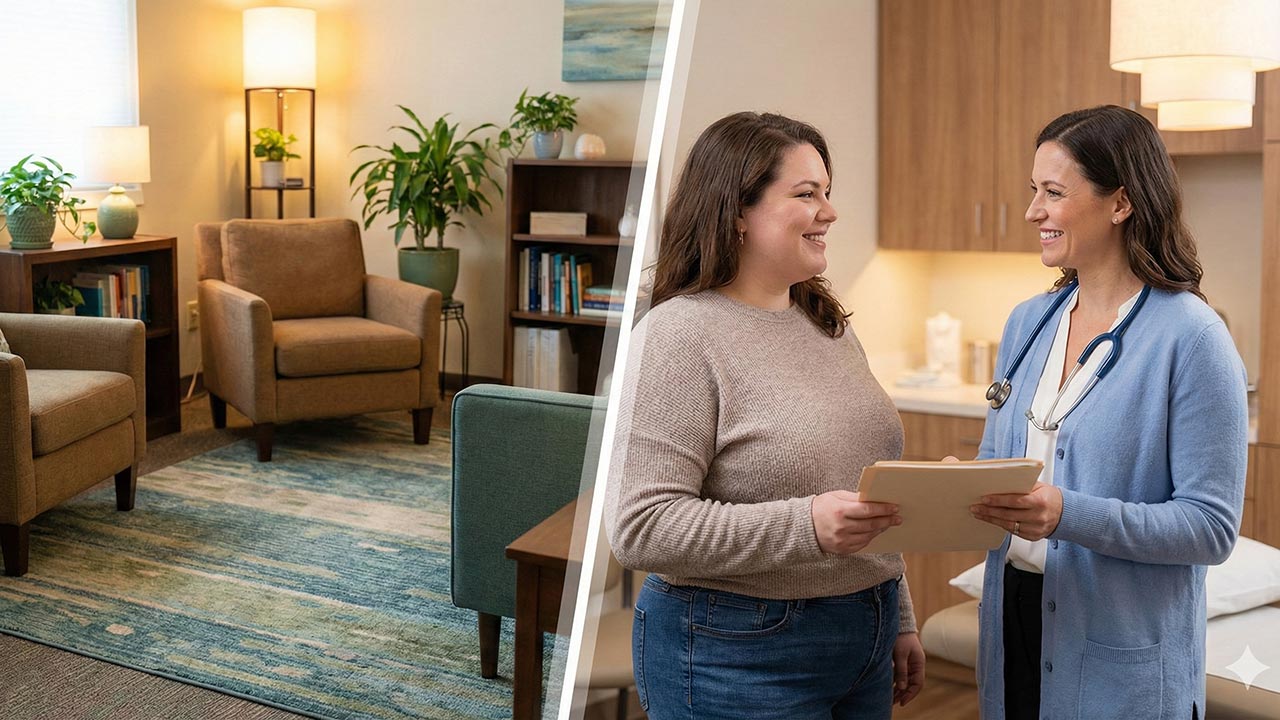
This is a common experience for fat patients. A doctor walks into the room, looks at your body, and decides the problem before their hand even leaves the door handle.
- The Reality: Thin people get knee pain. Thin people get high blood pressure. Thin people get PCOS. When a doctor sees a thin patient with these symptoms, they run tests, prescribe physical therapy, or investigate autoimmune markers.
- The Risk: When a doctor sees a fat patient with these same symptoms, they often stop investigating. They prescribe weight loss and send you home.
- The Consequence: This leads to delayed diagnoses of serious conditions (like cancer or autoimmune diseases) because the doctor was blinded by the patient’s size.
In North Carolina, where we have high rates of conditions like Lyme disease in the mountains or autoimmune issues statewide, missing a diagnosis because of “tunnel vision” on weight is a critical safety failure.
The Danger of Weight Cycling (Yo-Yo Dieting)
Standard medical advice often prescribes restrictive diets. Statistically, 95% of people who lose weight intentionally will regain it within 2-5 years. This leads to weight cycling: repeatedly losing and gaining weight.
Weight cycling is independently linked to:
- Increased inflammation in the body.
- Higher risk of hypertension.
- Greater insulin resistance.
The Irony: A doctor prescribing a diet to “help your heart” may actually be prescribing a cycle of weight fluctuation that stresses your heart more than staying at a stable, higher weight. Weight-inclusive care protects you from this harm.
- Naming the Wound: What is Medical Trauma?
Many of our clients in Charlotte and Raleigh come to therapy believing they have “health anxiety.” Upon closer inspection, we often find they don’t have a phobia of health; they have a traumatic stress response to doctors.
Medical Trauma is the psychological and physiological response to negative experiences in a healthcare setting. For fat people, this trauma is often cumulative. It is built over a lifetime of:
- Being scolded or shamed by authority figures.
- Being touched without consent (e.g., grabbing stomach fat).
- Having pain dismissed or minimized.
- Being threatened with death (“If you don’t lose weight, you’ll die young”).
The “Freeze” Response in the Exam Room
Do you ever practice what you’re going to say to the doctor, only to go completely silent or compliant once you’re in the room?
This is not weakness. This is a trauma response. Your nervous system perceives the doctor as a threat (based on past harm), and it shifts into “Freeze” or “Fawn” mode to survive the encounter. You smile, nod, and agree to the diet talk just to get out of the room safely.
Therapy Note: In our practice, we use modalities like EMDR and Internal Family Systems (IFS) to heal this specific trauma, helping you regain your voice so you can advocate for your physical needs.
- Your Rights as a Patient in North Carolina
You are not a passive recipient of care. You are a consumer, and in North Carolina, you have specific rights. Knowing these can help ground you when you walk into a hospital or clinic.
- The Right to Refuse Treatment (and Weigh-Ins)
Under North Carolina General Statutes (and general medical ethics), you have the right to refuse any medical procedure or intervention. This includes being weighed.
- The Scale is an Intervention: Stepping on a scale is a medical measurement. Unless it is necessary for anesthesia or a weight-based medication (like chemotherapy), you can decline it.
- How to do it: You can simply say, “I decline to be weighed today.” You do not need to give a speech. “No” is a complete sentence.
- The Right to Unbiased Care
While weight is not yet a federally protected class like race or gender, North Carolina patient bills of rights generally guarantee “considerate and respectful care.”
- The Documentation Hack: If a doctor refuses a test (like an MRI for back pain) because of your weight, you have the right to ask for that refusal to be documented.
- The Phrase: “Please document in my chart that I requested an MRI for my back pain and you are refusing to order it until I lose weight.”
- The Result: Most doctors will change their tune immediately. They do not want a paper trail of negligence that could lead to liability if your condition worsens.
- Non-Discrimination Ordinances (The Local Advantage)
North Carolina is a patchwork of laws. However, progressive areas like Durham, Orange County (Chapel Hill/Hillsborough), Buncombe County (Asheville), and Greensboro have passed local Non-Discrimination Ordinances (NDOs) that are broader than state law.
- While these primarily cover employment and public accommodations, they set a community standard. If you are in Durham or Asheville, you are in a jurisdiction that explicitly values protection against discrimination, which empowers you to file complaints with practice managers if you are mistreated based on size.
- The Script Library: What to Say When…
Advocacy is a muscle. It helps to have the words ready before you are in the high-stress environment of the exam room. Feel free to print these out or save them on your phone.
Scenario A: The Nurse asks you to step on the scale.
- Option 1 (Polite Decline): “I’m choosing not to be weighed today. You can just write ‘declined’ in the chart.”
- Option 2 (Blind Weight – if medically necessary): “If the weight is absolutely required for my medication dosage, I will step on backwards. Please do not read the number out loud or write it on my discharge paperwork.”
- Option 3 (The Explanation): “I am in recovery from disordered eating, and being weighed is a trigger for me. I do not get weighed unless it is an emergency.”
Scenario B: The Doctor suggests weight loss for an unrelated issue (e.g., ear infection, flu, sprained wrist).
- The Logic Check: “I understand you think weight loss would help. However, I’m here for my ear infection. Can we focus on treating the infection today?”
- The Evidence Check: “I have a history of weight cycling, which I know is harmful to my health. I am focusing on health behaviors rather than the scale. How can we treat this condition without focusing on weight loss?”
Scenario C: The Doctor blames a chronic condition (e.g., knee pain, high blood pressure) solely on weight.
- The Golden Question: “What treatment plan would you recommend for a thin person who walked in with these exact same symptoms?
- (This forces them to offer the real treatments: Physical Therapy, anti-inflammatories, beta-blockers, etc., rather than just “diet and exercise.”)
Scenario D: The “Pre-Diabetes” Scare Tactic.
- The Context: Doctors often use “Pre-Diabetes” to scare fat patients into crash dieting.
- The Script: “I am interested in improving my metabolic health. I would like to discuss adding movement, managing stress, and nutritional changes to support my blood sugar, but I am not interested in a weight-loss focused diet, as I know that leads to weight cycling.
- Navigating the NC Landscape: Urban vs. Rural Access
One of the biggest challenges in North Carolina is the disparity between our medical hubs and our rural counties.
The Triangle & Asheville: The Safe Zones
If you live near Durham/Chapel Hill or Asheville, you have access to some of the most progressive weight-inclusive care in the South.
- Radical Healing (Durham): An integrated care facility that is explicitly HAES-aligned, queer-affirming, and BIPOC-centered. They prove that you can provide primary care without body shaming.
- Mosaic Comprehensive Care (Chapel Hill): Led by Dr. Louise Metz, an internal medicine physician who is a national leader in weight-inclusive care. This practice explicitly treats eating disorders and general health from a weight-neutral perspective.
- Western NC: Providers like Dr. Joshua Corn (Naturopathic Medicine) and the referral networks maintained by Resilient Mind Counseling offer safe harbors in the mountains.
The Rural Reality: “Medical Deserts”
If you live in Robeson, Halifax, or Burke counties, you may only have one doctor in town, and they may be very traditional.
- Strategy 1: Telehealth. You can see a primary care provider or therapist in Durham or Asheville via video call, even if you live 3 hours away. NC licensure covers the whole state. Use this to your advantage.
- Strategy 2: The “Good Enough” Doctor. If you must see a local doctor for physical exams, use them only for the physical needs (strep tests, X-rays) and rely on a weight-inclusive telehealth provider for chronic disease management and counseling.
- Strategy 3: Bring a Bodyguard. Bring a partner, friend, or doula to your appointment. Research shows that doctors behave better when there is a witness in the room.
- How to Vet a New Provider (Before You Go)
Don’t waste your time and emotional energy on a provider who will harm you. Screen them before you book the appointment.
Call the front desk and ask these three questions:
- “Does this practice follow a Health at Every Size® or weight-inclusive approach?” (If they don’t know what that means, it’s a red flag).
- “I prefer not to be weighed. Will the doctor and nursing staff respect that boundary without giving me a hard time?”
- “Do you have large blood pressure cuffs and armless chairs in the waiting room?” (This tests their physical accessibility and awareness).
Search Tip: Look for providers who list “Eating Disorder Recovery” or “Intuitive Eating” as specialties. Even if you don’t have an eating disorder, these providers are trained in weight physiology and are far less likely to prescribe diets.
Recommended NC Directories
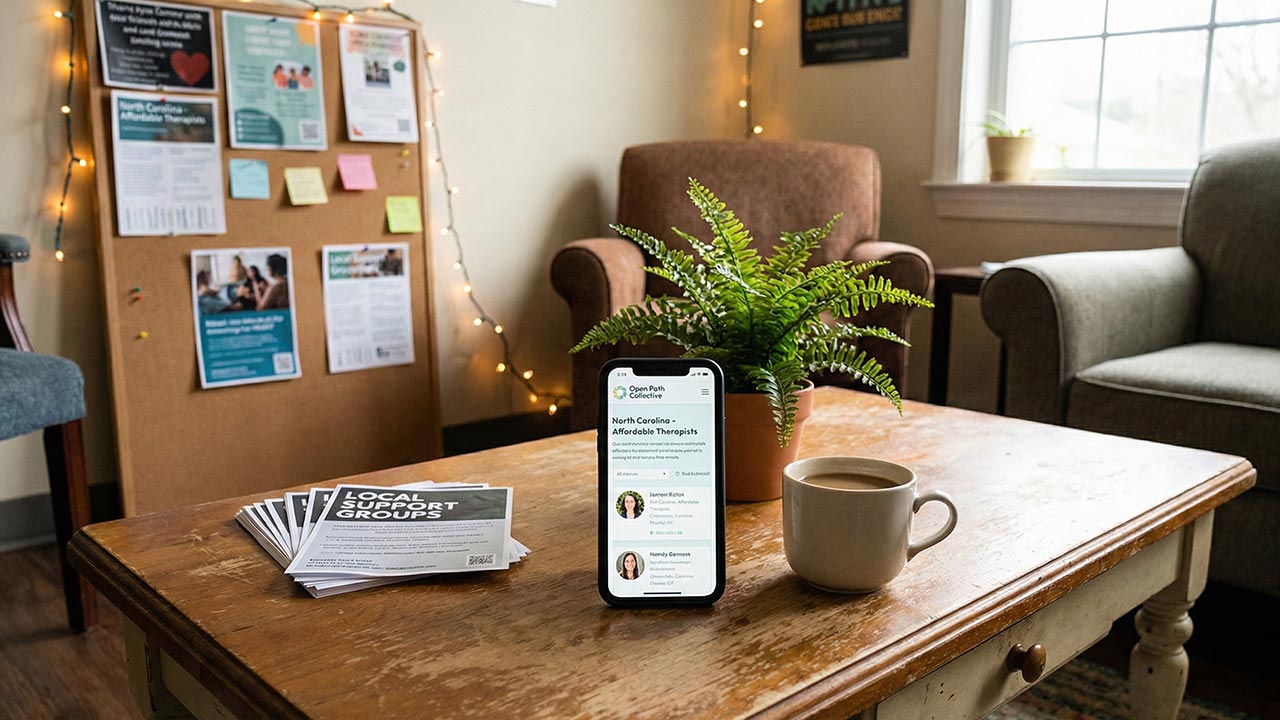
- Carolina Resource Center for Eating Disorders (CRC for ED): Based in Asheville/Triangle, they maintain a vetted list of weight-neutral providers (therapists, RDs, and MDs).
- ASDAH (Association for Size Diversity and Health): Their “HAES Expert” search tool can filter for NC providers.
Conclusion: You Deserve Safety
Medical safety is not a luxury. It is a right.
If you have been avoiding the doctor because you are afraid of the lecture, please know: It is not your fault. The system has failed you, not the other way around.
By arming yourself with these scripts, understanding your legal rights in North Carolina, and building a care team that respects your humanity, you can reclaim your healthcare.
You do not have to shrink to be safe.
Ready to heal from Medical Trauma?
If reading this brought up memories of bad doctor visits, you might benefit from processing that trauma in a safe space.
- For Therapy: Contact our practice or Resilient Mind Counseling (Asheville/Virtual) / Valid Love (Wilmington).
- For Medical Care: Contact Radical Healing (Durham) or Mosaic Comprehensive Care (Chapel Hill).
- For Community: Find a Fat Girls Hiking chapter in NC to reconnect with your body in nature, away from the clinical gaze.
Disclaimer: This guide provides educational information and advocacy strategies, not legal or medical advice. In a medical emergency, always seek immediate care.